A STRENGTH TRAINING GUIDE FOR WOMEN OVER 40 (Perimenopause + Menopause)
Menopause and exercise made simple. Learn how strength training supports muscle, bone, energy and body composition-plus how to start safely over 40.
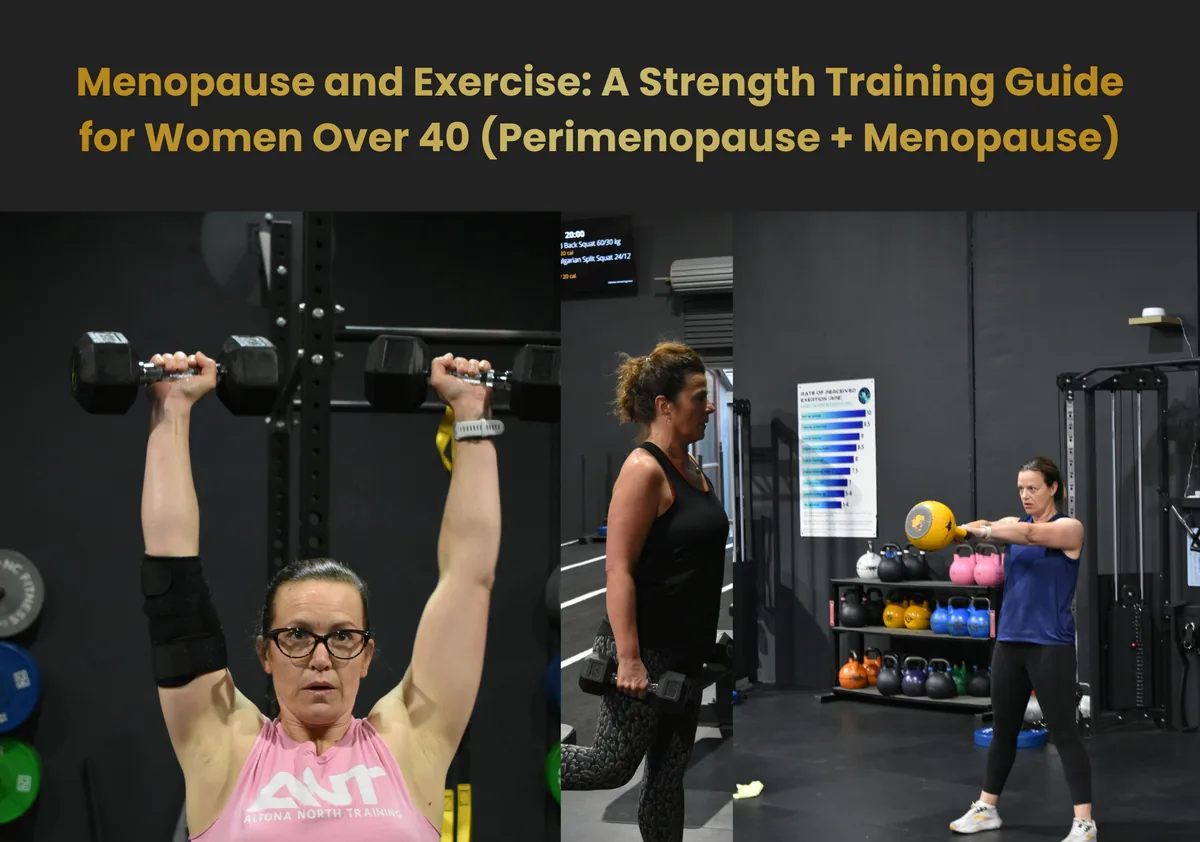
Menopause and Exercise: A Strength Training Guide for Women Over 40 (Perimenopause + Menopause)
If you’re in your 40s (or beyond) and you’ve noticed your body responding differently to training, you’re not imagining it.
Many women in perimenopause and menopause experience changes like:
- stubborn body composition shifts
- reduced energy or motivation
- disrupted sleep
- increased stress sensitivity
- aches and pains that weren’t there before
- feeling like “what used to work doesn’t work anymore”
The good news: exercise is still one of the most powerful tools you have, but the approach often needs to be smarter, not harder.
At Altona North Training (ANT), we coach evidence-based strength and conditioning for everyday adults, and we’ve run education sessions on topics like menopause and training because it matters. This guide will walk you through what to focus on, what to avoid, and how to start in a way that’s sustainable.
Quick takeaway:
The best training plan for menopause is one that builds strength, supports recovery, and progresses gradually.
First: what is menopause (and what is perimenopause)?
- Perimenopause
is the transition phase leading up to menopause, often starting in the 40s (sometimes earlier). Hormones can fluctuate a lot here.
- Menopause is defined as 12 months without a period. After that, you’re in post-menopause.
From a training perspective, the key point is this: your recovery, stress tolerance, and body composition can shift, so training needs to be structured and adaptable.
Why strength training is the #1 priority during menopause
If you only do one type of exercise consistently through perimenopause / menopause, I’d choose strength training.
Here’s why.
1) Muscle maintenance (and building) matters more than ever
As we age, it’s easier to lose muscle if we don’t train for it. Strength training helps you maintain (and build) lean muscle, which supports:
- daily function and independence
- metabolism and body composition
- joint support and resilience
- confidence and capability
2) Bone density support
Bone density is a major health consideration for women as estrogen declines. Strength training provides a loading stimulus that supports bone health over time.
3) Joint and tendon resilience
Many women notice more aches and niggles during this phase. Strength training - done with good technique and sensible progression - strengthens the tissues around joints.
4) Better long-term body composition outcomes
You don’t need to punish yourself with endless cardio. Strength training helps shape body composition by building muscle and improving how your body uses energy.
5) Mood, stress, and sleep benefits
Training can support mental health, stress regulation, and sleep quality - but the dose matters. The goal is to leave training feeling better, not flattened.
The biggest mistake: doing more and more cardio (and burning out)
A common pattern I see is: energy drops, body composition changes, stress rises… so people try to “fix it” by doing more high-intensity cardio.
Sometimes that works short term. But often it leads to:
- increased fatigue
- more soreness
- worse sleep
- higher hunger/cravings
- inconsistent training (because it’s too hard to sustain)
Cardio is valuable, but in menopause, the best results usually come from a strength-first plan with cardio that supports recovery and heart health.
The best exercise plan for menopause (simple weekly structure)
Here’s a realistic structure that works well for many women over 40.
Strength training: 2-4 sessions per week
- 2 days/week: great starting point if you’re busy or rebuilding consistency
- 3 days/week: ideal for steady progress
- 4 days/week: works if recovery and sleep are solid
Focus on the big movement patterns:
- squat pattern (legs + hips)
- hinge pattern (glutes/hamstrings + back-friendly strength)
- push and pull (upper body strength + posture)
- carries and core (real-world strength + trunk stability)
At ANT, we use structured 12-week cycles so progression is planned and measurable - which is especially helpful when your energy and recovery can vary week to week.
Cardio: 1-3 sessions per week (mostly low-to-moderate)
Good options:
- brisk walking
- bike
- rowing
- incline treadmill walking
Most weeks, keep cardio at a pace where you can still talk in sentences. If you enjoy intervals, keep them short and sensible - and don’t stack them on top of poor sleep weeks.
Daily movement: steps matter
If you want a “secret weapon” for menopause health, it’s consistent daily movement. Walking supports:
- energy
- mood
- recovery
- appetite regulation
- joint health
How hard should you train? (effort guidelines that actually work)
A simple rule that helps many women train consistently without burning out:
- Most sets should feel like you could do 2-3 more reps with good form
- You should finish sessions feeling worked, but not wrecked
- If sleep is poor or stress is high, reduce load/volume and keep the habit
Consistency beats intensity.
Strength training during menopause: what to focus on in the gym
- Technique and control
Controlled reps, stable positions, and good range of motion are your foundation.
- Progressive overload (gradual progression)
Progress can be: adding 1-2 reps, adding a small amount of weight, improving range of motion, improving tempo/control. You don’t need to max out. You need to progress steadily. (If you want the deeper explanation, link this to Blog #3 on progressive overload.)
- Recovery as part of the plan
Recovery isn’t “lazy.” It’s how you adapt. Prioritise: sleep routines, protein intake, hydration, stress management, realistic training frequency
If you’re constantly exhausted, the answer is rarely “train harder.” It’s usually “train smarter.”
What about belly fat / weight gain in menopause?
This is a big topic, and I’ll keep it practical.
During perimenopause/menopause, body composition can shift due to hormones, stress, sleep, and changes in muscle mass and activity levels. The most sustainable approach is:
- strength training consistently
- daily movement (steps)
- enough protein
- a nutrition approach you can maintain
- stress and sleep support
Quick note: if you’re doing “everything right” and still struggling, it can be worth speaking with a qualified health professional to rule out other factors.
Training with aches and pains (very common - and manageable)
If you’ve got knee, back, or shoulder history, you can usually still train - you just need smart modifications. Examples:
- swap barbell back squats for goblet squats or box squats
- use trap bar or kettlebells for hinge work
- choose shoulder-friendly pressing angles (like incline DB press or landmine press)
- adjust range of motion and tempo
If you’re in Altona North and want guidance, we can help. You don’t need to figure this out alone - and you don’t need a “perfect” plan. You need a plan that fits your body, your schedule, and your recovery.
At Altona North Training, we coach strength and conditioning with a supportive community and evidence-based programming, and we modify sessions so you can train safely and progress confidently.
Want help getting started? Get in touch and we’ll guide you.